By Stuart Grauer
Reprinted from: from Association of Supervision and Curriculum Development Smartbriefs, most popular column of the year, 2014:http://smartblogs.com/education/2013/11/06/play/
Children and adults alike use play to make sense of the world. Here are some things we develop through play: creativity, imagination, problem solving, resiliency and the ability to handle the unexpected.
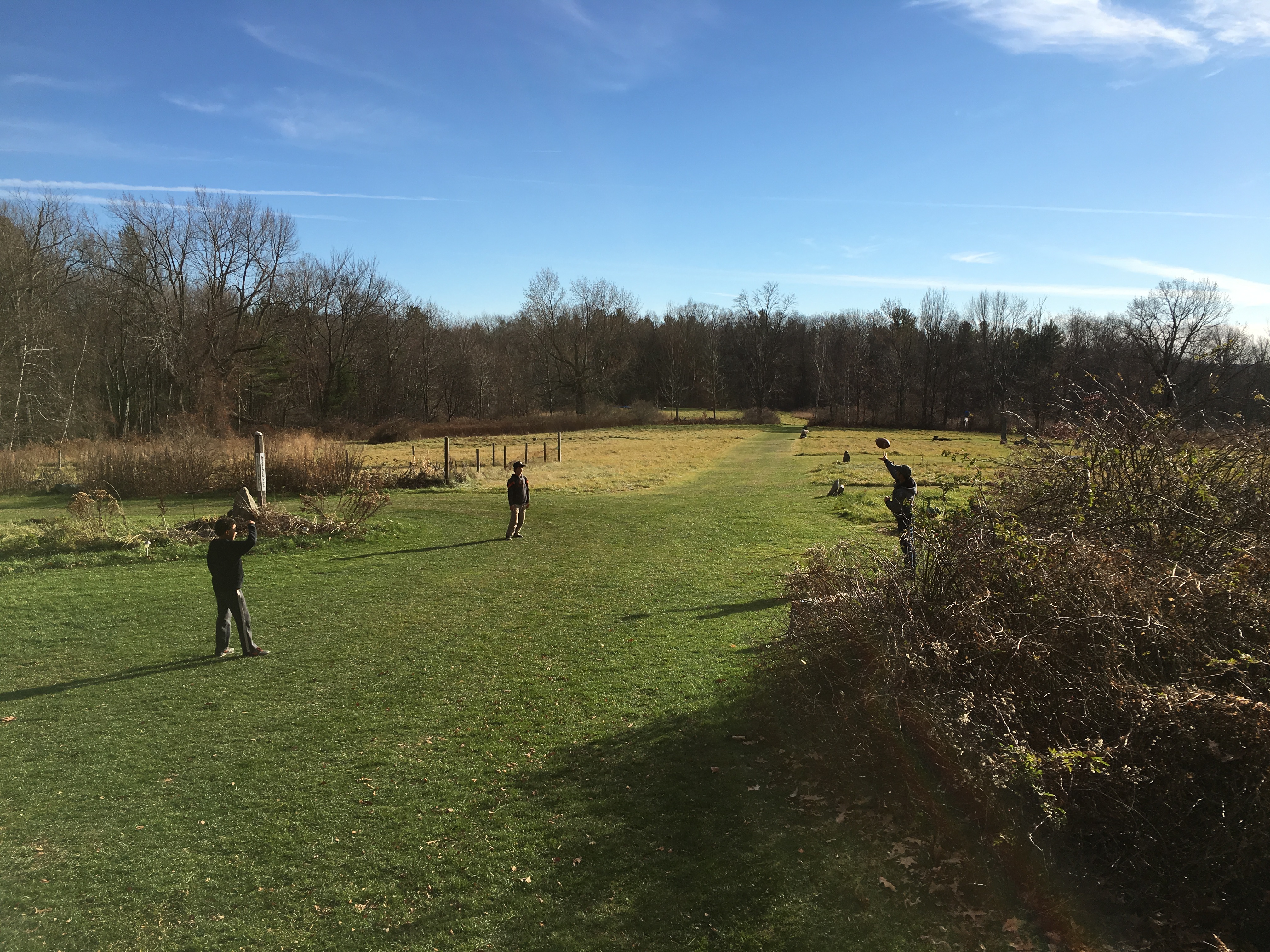
Back in 1999, after eight years of operating out of a shop front (and eventually several shop fronts), we moved The Grauer School onto our dream site: five, green, coastal acres in Encinitas, Calif. We could have a real playtime at last — a green recess. Running, chasing, throwing, falling. It was then that we made an unexpected finding about the typical California suburban kid: many did not know how to recreate or use unstructured time. They stood around, looked into their computer screens, hung out in corners of the field and slouched on couches in the lobby.
Since I grew up running pretty much all day long, and since my parents’ primary form of discipline consisted of the demand, “Get outside!” this problem had never occurred to me. I assumed that there was something instinctual about play and that, if you let kids alone, they would just do it. However, in the case of many kids, play sometimes is drummed out of them through tightly-managed schedules, too much homework, too many digital devices, too little time in nature, too little sleep, and too much parenting and schooling. Eventually, we stationed teachers outside not so much as to supervise as to nudge the kids into games that they could learn to play together again. We even made a policy that middle schoolers were required to be outdoors during lunch and breaks. It took a couple of years before we finally felt we had established a culture of open space and free play in the out of doors. We still have to work at this regularly, which we do primarily through nudging, encouraging and telling kids: “Get outside!”
At this year’s annual conference of the Progressive Education Network (PEN) in Los Angeles, I was privileged to see a legendary mind address the topic of play: Stuart Brown, a Stanford psychiatrist and producer of a PBS series on play whose home office is a tree house.
Brown embarked on his research early in his career, when he noticed that homicidal young males had little playtime as young children compared to healthy non-murderers! This research would have struck me as bizarre and irrelevant as a young teacher, but since that time America’s nightmare dreams have become real as students have actually attacked several schools. The high school massacre at Columbine seemed to wake us up to a new reality.
Great minds have a way of enabling us all to rededicate our lives more clearly to things that matter. Brown talked for an hour about “What nature wants you to know about play.” Here is some of what he said, and I guarantee you will agree that it matters.
Brown’s first challenge was this, for all of us: “If you are not bringing your sense of play into your work-life, take a second look.” Play is embedded in nature and we must express it routinely to be healthy and happy. Play and laughter reduce anxiety and enable us to “redefine” failure in terms of the growth it brings. “Neuroscientists, developmental biologists, psychologists, social scientists, and researchers from every point of the scientific compass now know that play is a profound biological process,” Brown notes.
One critical aspect of play as we are growing up is imagination. “While you are imagining who you can become, you are them,” and this provides you with essential lessons going forward as you develop. Aside from imaginary play, there is celebratory play, ritual play, aesthetic (artistic) play, rough and tumble play, narrative (story) play, and more. They all belong in school, says Brown. Brown also likened playing to dreaming, one of the most fascinating notions I’ve ever heard, and one I will surely follow-up on. Why are play and dreaming alike? Wow, what a fantastic question!
Compared to others Brown studied in his research, that creative achievers such as Nobel laureates virtually all had high amounts of play in their early lives. Brown even studies obituaries. There, he finds that what we tend to remember most kindly and importantly about people when they are gone are their playful moments and their expressions of joy.
Play, he has realized, is directly related to the development of optimism and a lack of play is associated with addiction, anxiety, and other disorders. We develop empathy at play. One reason for this is that as we play together, we lock eyes, “tune in” to one another physically and mentally, and our mental activity is actually synchronizing. This synching is called “attunement,” and if we get enough of it as we grow up, we develop empathy. Deprived of this attunement as adults, we lead mundane or disconnected lives.
Physical play seems particularly important to many. When the legendary Jet Propulsion Lab (JPL) got into a rut not many years ago, they analyzed their new recruits and realized they were focusing on people with the best grades: compliant people who were not solving real problems. Then, they analyzed their older engineers and found that the most successful ones were those who had spent lots of time playing with their hands as they were growing up — an amazing finding that caused the JPL management to completely redesign their hiring process. If you haven’t played much as a kid, you need not apply to the JPL.
“The opposite of play is not work,” he pointed out. “It’s depression.” So play when you are at work! Luckily, we have the capacity of play throughout life — this keeps us happy and creative. Play, Brown strongly believes, is what makes life worth living. It is our “star system,” where many of our actions are designed to guide us in getting along with others.
He cautions against “play hygiene,” where we try to make every environment safe and controlled. Our kids need to learn how to fall. According to Dr. Brown, never in history has there been such deprivation of play. This will bring huge losses according to Brown, since our most essential and distinctive talents are first exemplified in play. Nobel laureates and other such successful people are those who stay true to their play nature. What can we do in the classroom to discover our rediscover our sense of play?
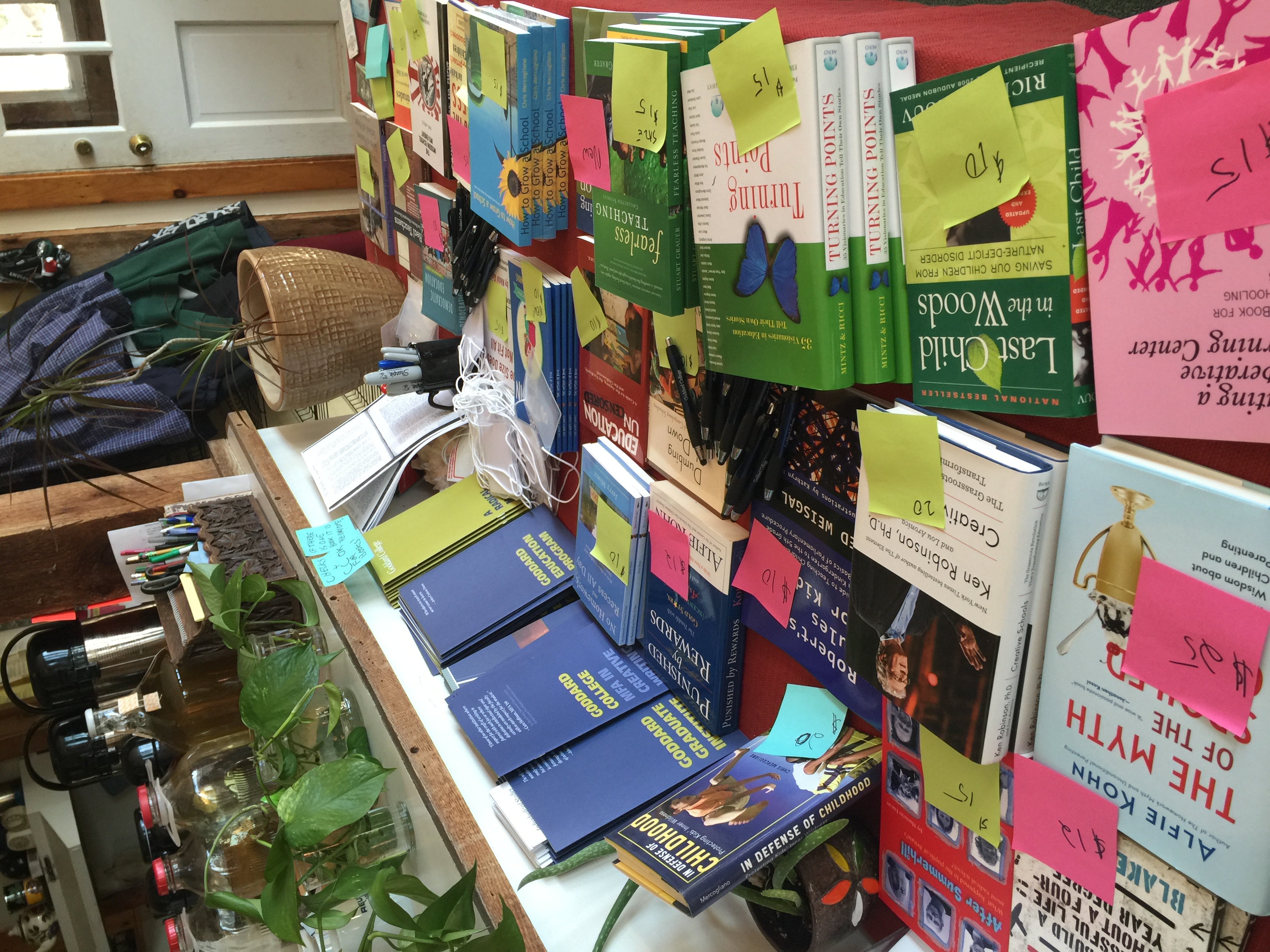
Stuart Grauer is a teacher, founding head of The Grauer School in Encinitas, Calif., and founder of the Small Schools Coalition. He accredits and consults for schools worldwide. He is the author of “Real Teachers” and is launching his newest book, “Fearless Teaching: Collected Stories” through Aero Press in November 2015. Visit www.fearlessteaching.com for more information his newest book.