

The following interview is shared with you by both Pat Farenga and Isaac Graves. To learn about this interview series and reproduction, citation, and copyright information, please click here. To find out more about Pat Farenga and his work, click here.
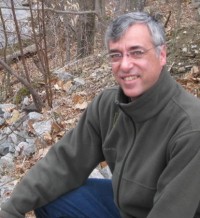
Pat Farenga
 Isaac Graves: What does community mean to you?
Pat Farenga: Community is a group of people who share my interests, and I share theirs. I feel they have my back, and I have theirs. I think it’s all circles within circles. The more circles that you are a part of, the better off you are.
IG: How does community play out in your life?
PF: It's been an incredibly important part for me because, first of all, most of the ideas that I share are in the minority. It’s very important that I stay in touch with people who share that. At the same time, it’s very important not to get trapped in the echo chamber of those people. It feels very important to also be reaching out and be part of a larger world. I realized if I didn’t have my community of homeschool and other supports, I get a lot of support from non-homeschoolers, too. That’s the great thing about having been part of John Holt’s work—I've always had a strong connection with the alternative school community as a result of that. It’s not this monomaniacal view of community that we get in school, which is that everything has to be pointing toward improving a child’s test scores. It is the relationship that matters between a teacher and a child or a parent and a child. Our schools’ idea of community is really turning teachers into professional technicians. Students have to stay away from them a certain distance because they give off the professional teacher vibe. So I’m really glad that the communities that I’ve built up and been part of—homeschooling and alternative schooling—have been solidly built on this idea of friendships and relationships. I think that that is completely under siege with the technocracy that we have where everything has got to be reduced to a number and a monetary value and that anything that doesn’t serve that purpose is considered not useful.
IG: What do you find most meaningful about community?
PF: To me, having that knowledge that I am talking to a real person who will respond to me and respond to my request. Even my unspoken request—I say, "I’m fine," but they look at me and say, "No, you are not." That, to me, is not only a friend but also a community.
When I think about community and democracy, I really feel that we always err on one side or the other. There seems to be a real issue, that we don’t know how to be an individual and be part of a group. All too often, schools demand that we give up our individuality to become part of a larger group. Then, on the other hand, at the other extreme, you have some homeschoolers and alternative schools saying the individual and what they want is the most paramount thing.
I really feel it is the need for face-to-face contact that prevents you from turning somebody into just an object or something that is not part of your community.
IG: What's missing in community?
PF: I would say it is trying to find like-minded individuals who want to move forward on issues that are of concern to me.
Also, with the different initiatives, it’s really interesting to me how they usually fail because people just can't seem to sustain the effort for reasons that puzzle me. I know that certainly lack of funding is always a big one for us, but that’s never stopped anyone from trying. We are dividing ourselves and I see this in the alternative school community big time.
Everyone has their ideas about how things should be done, but there’s an attitude, "If you are not like us, then I don’t think we should really be talking." That’s bothered me a lot because I’ll talk with anyone. I’ve got my opinions, but that’s what it’s about. I’ll say my piece, you’ll say yours, and I’ve changed my opinions based on whatever runs through my life. It’s certainly one of the most important lessons I learned from John Holt. Right up until he died, he was changing his ideas about how children learn.
IG: What is an ideal community to you?
PF: Right now I would say an ideal community for me personally would be one that had young and old in it together. I really always enjoy that mix, and I’ve always enjoyed working in places that have a mix of young and old people. I would like it to have music because I’m a musician, so I love opportunities to play my saxophone and piano as much as possible.
I guess my ideal community would always have space for someone new. Too often, community gets into this idea that we all think the same, that we are all doing the same thing. I would like to find to another way to build communities—to have another place where people can gather that is completely unprogrammed.
IG: What does a democratic education mean to you?
PF: We live in a democracy. The United States is a republic, and we use a democratic process to run it. The idea is that you participate in a democracy, and that’s how you learn about it. We have this whole idea about learning about democracy in school that misses the whole point.
I think that democracy is best as a process. You learn democracy by doing it. One of the things that I really enjoy about the homeschooling community is that right now, Massachusetts homeschoolers are going to the State House. They are not going to the State House because they are protesting a bill or anything; they are going there to meet their legislators. To let them, "Know we are here, we are educated, we are enjoying ourselves, there is no child abuse. Our kids are happy and healthy." So let them see that they are regular citizens and that they are curious about what’s on the plate in the State House.
IG: How does education play out in your life?
PF: Constantly. Personally, I love learning new stuff all the time—with my music, with magic, taking classes and stuff like that. Then I share that with the people in my life as I work, make music, perform, and so on. I now give magic lessons to kids in an after-school program during the school year; when I was homeschooling our daughter, Audrey, for three years we ran a magic club in our home, and it was great.
IG: What do you find most meaningful about your work in education?
PF: Well I have a problem with the word "education" because it no longer means teaching and learning. Teaching and learning are the verbs that I like to use; they make sense to me. A person is a learner; a person is a teacher. When someone is an educator, it only seems to me that they are working on me. Like they are trying to get me do something that they think is better for me. They want me to have a credential; they want me to be processed. There is a wonderful phrase from the ‘60s: "schooling is not the same as education." I think we need to get back to the ideas of teaching and learning and working individually and very humbly and with humility on those instead of these grand schemes to educate for the future.
A friend of mine just sent me this link in Forbes Magazine; Paul Thiel is a venture capitalist in California who was one of the early and big investors in Facebook. He has created a trust fund that will award $100,000 every year to 20 students who drop out of college to start their own business. Now that’s the sort of thinking I like; that’s what I want to see.
IG: What's missing in education?
PF: The reality is that we have a school system that is too big to fail, and most people rely on it. Homeschooling has grown to two million children now, but that’s nothing compared to the 64 million children who are in public schools and whose parents support it. I think we just need to figure out ways of opening up other places for people to go, on top of the existing system or alongside it. Right now, for a lot of us, it’s under it, like we are underground, but I think that homeschooling should be embraced by the schools. They talk about parental involvement—what could be the epitome of parental involvement and education beyond homeschooling? If we can come out and say that there are many different ways of learning, many different ways of becoming a success in America, then we can have many different types of schools and opportunities. We don’t even need schools. I would like to see more clubs. I would like to see more activities. Have a sports academy where you could learn reading, writing, calculation and art stuff by studying basketball, football, and soccer. That’s too much fun for educators to tolerate, I guess. If the kids are perceived as having fun, they are somehow perceived as not learning. Let kids talk and decide what they want to do on their own. You want an adult somewhere there to help them with their questions and to make sure that things are safe, but let them run the show as much as possible. I’m sure some parents would choose those learning situations.
IG: What is an ideal education to you?
PF: To me, it would be something that doesn’t even look like a program that’s being administered to somebody with the expectation of a degree. To me, it would be lifelong; opportunities to learn all the time in your local community and the world at large. The reward would be that I’m able to use this information for my own betterment or to satisfy my curiosity for a personal reason. The idea that education is only for kids from kindergarten until they graduate college, then after that you are “educated” or you have attained a certain level of education—that, to me, is crazy. We are learning constantly. I’m 57 years old, and I hope I continue learning until I die. Think of what we could do if we just stopped giving standardized tests and got everyone books, health care and good food with that money. That can make a big difference in people’s lives. I really see education much more holistically. I don’t view it as these little buildings where teachers teach kids. I view it as the whole society. That’s the other thing that I take great exception to—when people say, “The world is my classroom.” No, the world is not your classroom; the world is your environment. It’s your birthright that you live in it. Birds fly, fish swim, humans learn. To view the world as your classroom is to view the world like a gigantic school, and that is horrible. The world is the world; let’s enjoy it. Let’s embrace it so there are no dotted lines separating math from science from physics from reading and writing.
IG: What do you think people should know about the relationship between community and education?
PF: I think people should realize that there is a connection. It’s not just that the school is where you donate your services, run the bake sale, stand in the back of a classroom and do what the teacher asks you to do for your kids. That’s a very shallow community. For me the school has got to embrace the fact that kids learn and adults learn all the time.
I mentioned this book, Being Me and Also Us, by Alison Stallibrass. It’s about a place in London that existed called the Peckham Center. It existed in the 1930s, and then after World War II, it came back in the 1950s.
It was a community center, but it was more like a YMCA. It had a swimming pool, a gymnasium, a cafeteria. It had a lot of multifunction rooms, and it was a medical study to see what conditions created health in people.
They were looking for adults, but then once they started letting the kids in there, it was fascinating. Because then the kids started self-organizing and watching what the adults did. It’s a fascinating study, and I would love to see more places like that. Why must we have private health clubs where everyone is trying to get six-pack abs? Why can't we have government-sponsored places turn a school into this?