By Brent Kreuger
There used to be an adage that stated “the more things change, the more they remain the same.” It was a valid saying for most of mankind’s existence simply because for most of mankind’s existence, any kind of change that humans experienced happened very, very slowly. As an example, the Stone Age started roughly 3.4 million years ago and didn’t end until somewhere between 6000 and 2000 BCE. For most of that time period humans lived a nomadic hunter/gatherer existence and the life that any individual could expect to have was for the most part, no different than the life of their parents, grandparents, great-grandparents or really anyone in their knowable family tree. People also knew what the future held for them and their children because it was pretty much exactly like the past. As for the variety of jobs available, you could really only be a hunter, or a gatherer, and if you, as a parent, wanted to prepare your child for his or her future role, you’d take him or her along with you as you hunted or gathered and taught him or her how to hunt or to gather. It was a simple system and it lasted a very long time.
With the development of agriculture and permanent cities, more specialization meant the addition of more types of jobs. You could now choose to be a farmer or herder for example, but it didn’t mean we lost jobs; we still had hunters and we still needed gatherers. Change still happened very slowly and it was still easy to prepare your child for their future. As an example, there were approximately 3000 years between the invention of the simple nail and the invention of the first screw. That’s one generation of technological change taking place over roughly 120 human generations. Through this time period, more and more jobs were added to the list of choices while some old jobs were modified instead of being lost outright; (i.e. flint knappers became stone masons and/or blacksmiths). Even today we still have stone masons and we can still find blacksmiths.
With the industrial revolution came an interesting phenomenon. Technological change started happening at an accelerating rate; single lifetimes instead of generations, and there were now so many different job types available that your child might decide to choose a job that you yourself knew nothing about. This was still not a problem though. You would simply apprentice your child out to someone who did that job, and you might take in another man’s child as your apprentice in your field of expertise. All was still good and every child was still being adequately prepared for their future requirements.
Today, this is no longer the case. For the first time in human history, technology is profoundly changing our society from one generation to the next. To highlight this, think of the fact that from mankind’s first powered flight in 1903 it took less than 66 years to put a man on the moon. That’s many generations of technological change taking place in less than one human person’s lifespan. That amount of change in that short of a period is unheard of when compared to all previous human existence. This puts us in very unfamiliar territory. Because our society is now changing so fast, for the first time in history, we have almost no idea what our future will be like. Until now, we’ve always been able to predict the future by looking at the past. It’s what our education system has always done and continues to do in order to prepare students for the future. But that strategy is no longer working. Looking back we see that the trend has always seen a growth in the number, diversity, and quality of jobs, but for the first time, because of recent technological advances our future job availability will be severely limited, and any institution that continues to look back in order to prepare for the future will absolutely miss the mark.
Author and technology blogger C.G.P. Grey has produced an illuminating video about the already started technology revolution called “Humans need not apply.” (http://www.cgpgrey.com/blog/humans-need-not-apply ). In it he states that we have already started down a path that will see robots and/or robotic apps very quickly replace humans in the medical, legal, transportation and service sectors, and in fact, in just about every existing industry. He sees it as inevitable because it’s already started. It’s not that we won’t have jobs that need doing; it will simply be a case of what will be doing those jobs. Through no fault of their own, graduates today from high-school, technical school and even university will very quickly find themselves out of a job simply because there will be no jobs left for them to do. Self driving cars are on the horizon and already have a better driving record than their human counterpart. This one industry alone could be responsible for upwards of 70 million jobs all set to disappear within the next decade. McDonald’s Europe just announced that it is hiring (installing) 7,000 touch-screen cashiers. (http://www.cnet.com/news/mcdonalds-hires-7000-touch-screen-cashiers/ ). This alone could replace over 14,000 human employees.
The truth is that the generation that we have come to know as baby boomers will be the last generation to live with the security of an unspoken yet well understood pact between individuals and “society” as a whole. It was a covenant with our society’s education system that simply stated that if you invest your energy and resources into higher and higher education, you will then be rewarded with better and better jobs, more money, a higher standard of living, higher social status, and ever more opportunities. Since the advent of public education, this was always the promise, and for the most part, was pretty much honoured.
But that covenant has already been broken. For more than a little while now, we’ve seen people with university degrees working at fast food restaurants. In May of 2013, Forbes business magazine published a report that stated that half of college graduates were working at jobs far beneath their level of education. (http://www.forbes.com/sites/susanadams/2013/05/28/half-of-college-grads-are-working-jobs-that-dont-require-a-degree/ )
Predictions are that for the first time in our existence jobs, and opportunities, and even choice itself will be less in the future then in the past, and this will be a permanent situation.
Sir Kenneth Robinson – author, speaker and international advisor on education to governments has been calling for a total redesign of our current education system for years. His talks are some of the most watched lectures on the very popular TED talks’ site https://www.ted.com/talks/ken_robinson_changing_education_paradigms
For enlightened parents who grasp the reality of what Sir Robinson and C.G.P. Grey have been saying, they are slowly coming to the terrifying realization that their most trusted and revered educational institutions are still preparing their children for a world that increasingly will not exist. The fact that we can no longer trust our own education system to do what is best for our children is a sobering thought.
We are living in exponential times; not only is society changing fast but the rate that it is changing is also increasing. To see how fast change is affecting us, think of the fact that kids in school today have no idea what a typewriter is, have never seen a milkman, a slide rule, a floppy disk, a 16mm film projector, a photographic negative, or dial telephones. The richest country in the world with the largest military, highest standard of living, strongest education system and whose currency was the world standard… was Great Britain… in 1900. Britain held that distinction for hundreds of years but it hasn’t been true since the Second World War. The U. of S. holds that title now, but is fast being eclipsed by China after a mere 70 years. And India is already positioning itself to grab that honour from China even before China has the official title. All this in itself is a huge amount of change in an extremely short time, and it’s only getting faster. A student entering a 4 year technical program today will find that fully 50% of what he learned in his 1st year of study will be obsolete by the end of his 3rd year.
Children in school today will live in a world that will include driverless automobiles, 3-D printing of almost everything (which is why all the manufacturing jobs will be lost), implantable/wearable supercomputers controlled with your brainwaves (where you are ALWAYS online), universal language translators, embedded ID chips replacing passports, credit cards and drivers licences, manned missions to Mars (and other planets) personal genome mapping leading to personalized medication including carbon nanotube technology implants (bionics), a cure for cancer and diabetes, robots, robotic avatars, organ and other body-part regeneration using stem-cells harvested from your own skin, and being able to download your consciousness into a machine. While this might all sound like science fiction now, some of these technologies are already available in the marketplace, all of them are currently well into development and these are all just the tip of the iceberg.
There is a certain percentage of the population that has always resisted change which historically has been pretty easy to do. But that simply isn’t an option anymore. Change is inevitable, constant, and we are required to accept it as part of the new human condition. Active participation in this new reality is mandatory not an option or an exception.
So how DO we prepare our children to live in a world when no one knows what that world will be like? The U.S. Dept. of Labour estimates that today’s learners who are lucky enough to have jobs, will have 10 to 14 of them before their 38th birthday and many of these jobs will be in industries that don’t, as of yet, exist. Without knowing it, our education system has assumed the task of trying to prepare students for jobs using technologies that do not yet exist, to solve problems we do not even know are problems yet. How can they do that? And how can they do that if they are still looking backward to see what the future will be like? For more information on this, check out; https://www.youtube.com/watch?v=-5EeFNeQiW4
There have been many reports written by futurists and think-tanks suggesting that the main skills required by new employees of fortune 500 companies will be skills that are not taught in today’s schools. One of those reports was from the School of Government at Harvard and they issued advice to those planning a career in the global economy of the future; it said that “school credentials would be devalued compared to real world skills” acquired by experience; it identified 10 qualities to acquire to meet the changing standards, none of which are usually found stressed by public schooling. These skills are;
Ability to ask questions that challenge common assumptions.
Ability to define problems without a guide.
Ability to work without guidance.
Ability to work absolutely alone.
Ability to persuade others that yours is the right course.
Ability to debate issues and techniques in public.
Ability to re-organize information into new patterns.
Ability to discard irrelevant information.
Ability to think dialectically.
Ability to think inductively, deductively, and heuristically.
(If you’re interested, you can read the entire article here)
These skills are NOT emphasised in your typical public school simply because public schools couldn’t even function if, for example, children were encouraged to challenge prevailing assumptions. They go on to state that if you want your kids to follow Harvard's advice, “expect no help from your government supported public school district; you’ll have to do it on your own.”
Albert Einstein once said, “We can’t solve problems by using the same kind of thinking we had when we created them.” The implications of this statement are profound. This means that we cannot use the same education system to create the thinking to solve the problems as the education system we had that created the thinking that caused the problems.
Every current education system in the world was born of the industrial revolution. Schools were created to serve industry. They were modeled after industry with factory-like assembly lines, batch processing students centralized around their date of birth, with standardized tests creating standardized workers and most of them interchangeable. The factory whistle was replaced with a school bell, yet the function remains the same. Public schools have effectively commoditized our children. It is for this reason that we must re-vision education in its entirety.
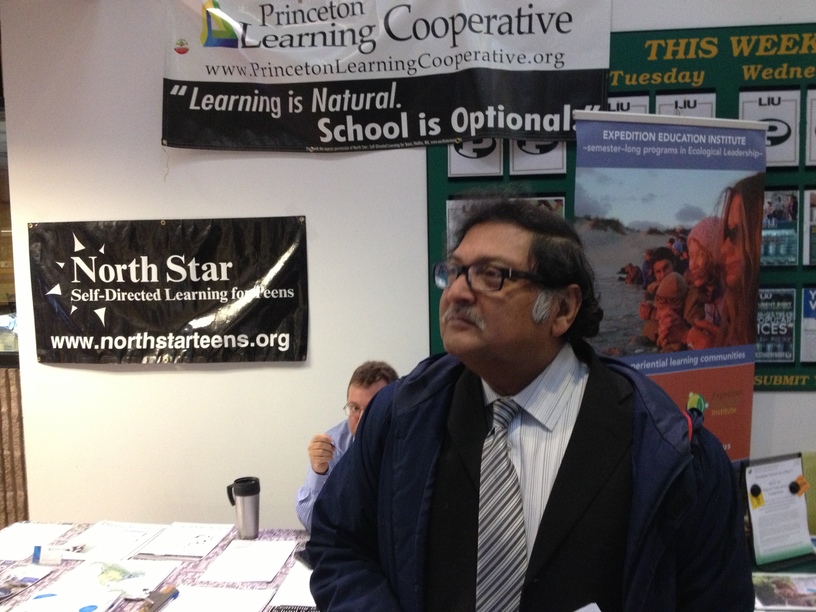
But… as it turns out, this education revolution has already quietly started. Indeed, all over the world forward thinking parents are abandoning their backwards-looking public schools in favour of what is so far being called “Alternative Education.” They are finding out that not only do they not need schools, but we often don’t even need teachers.
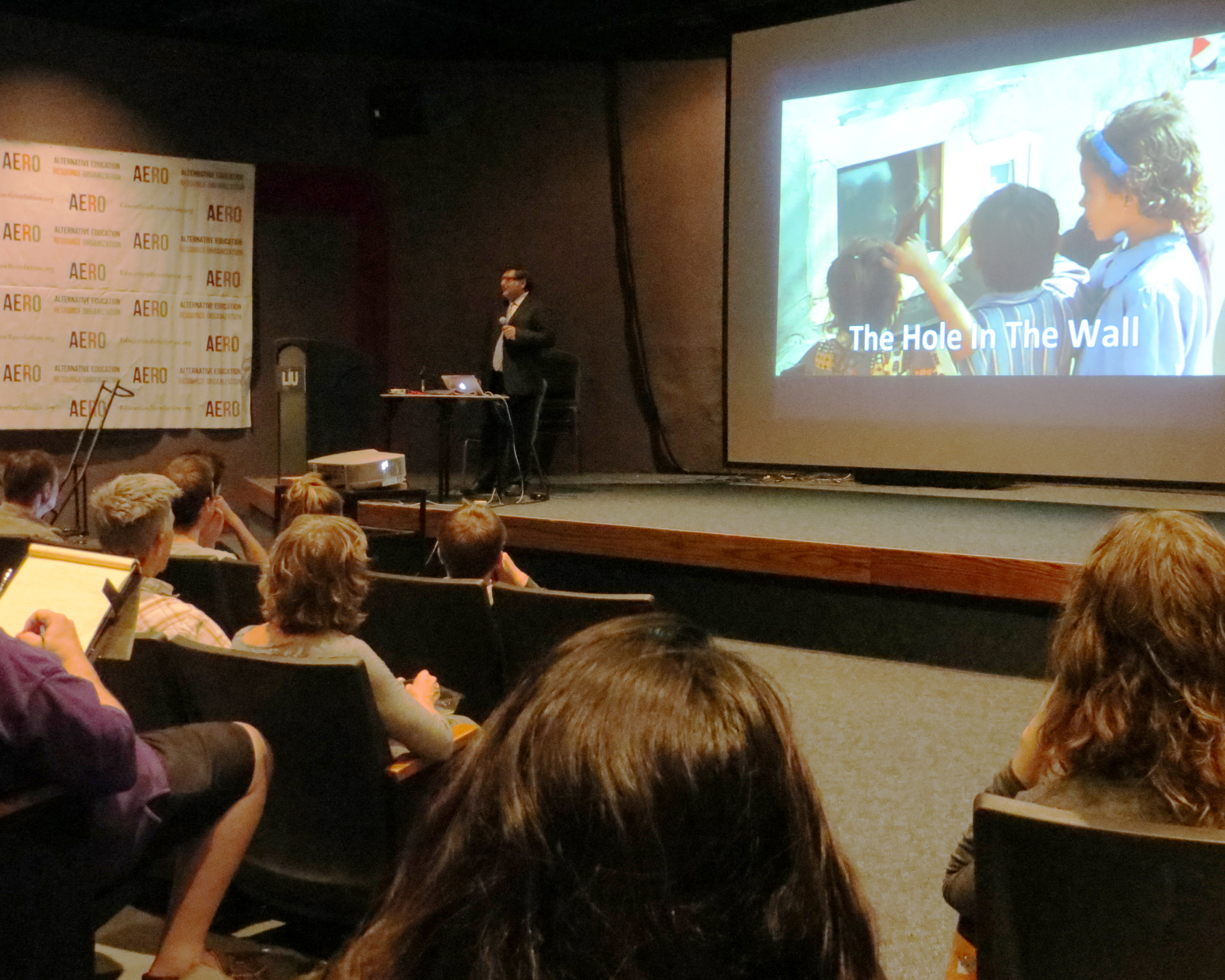
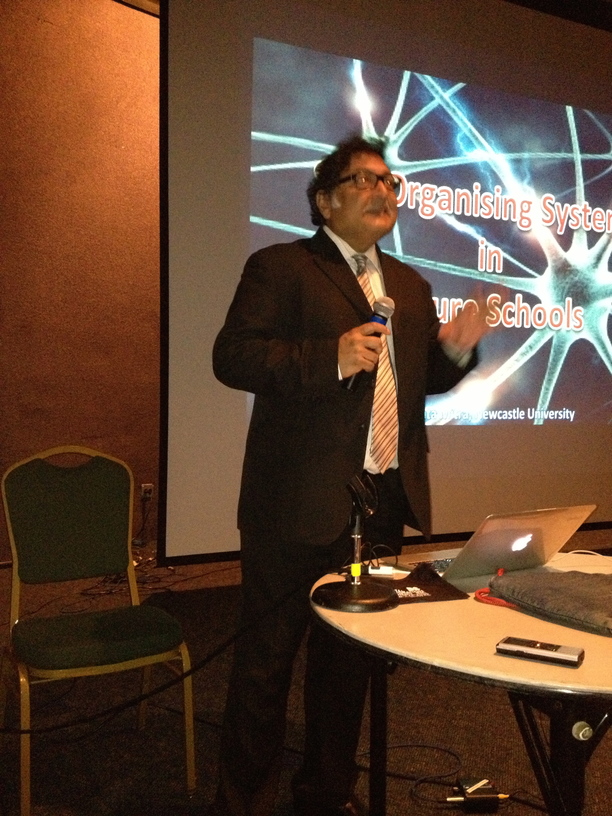
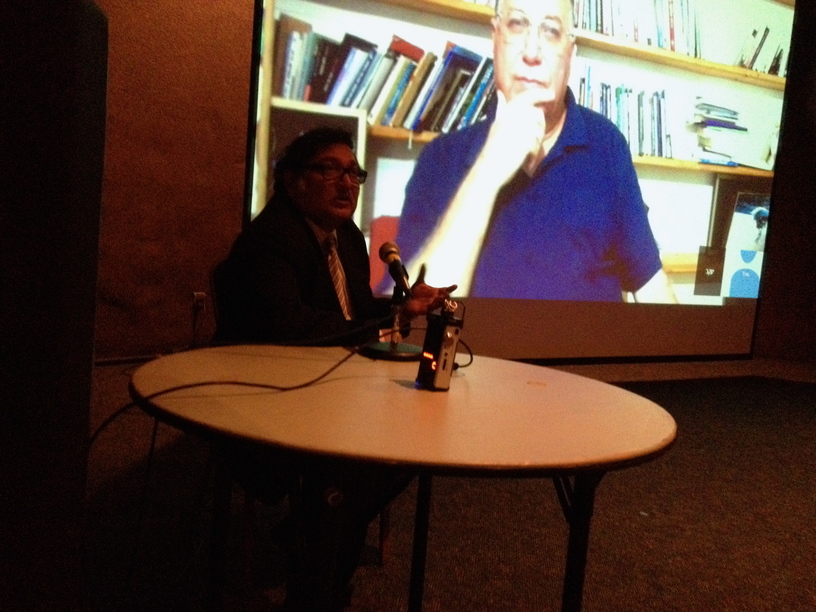
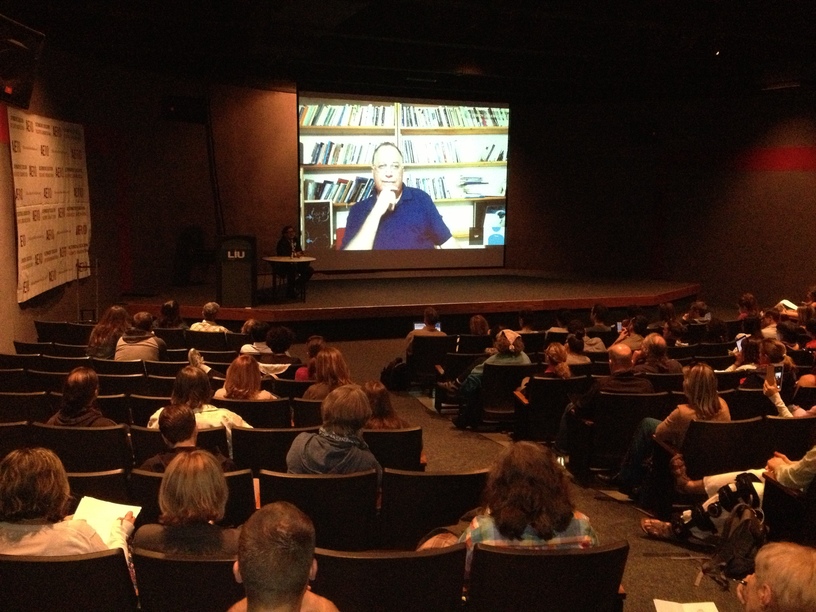
Sugata Mitra has done some fascinating experiments where he shows that given the right circumstances, children can educate themselves often better and faster than schools can do the job. He has shown that education, if left entirely to the learners, will become a “self organising system” (a system structure that appears without explicit intervention from the outside system) that will also show signs of “emergence” (the appearance of a property not previously observed as a function of the system.) http://www.ted.com/talks/sugata_mitra_the_child_driven_education. What Sugata has inadvertently stumbled upon and started to codify was what many educational theorists have known, and many unschoolers had been practicing for years; that being the fact that if there is interest, learning can’t be stopped, but where there is no interest, no amount of teaching can fix.
For most parents, though, the thought of taking their children out of school to “unschool” is a very radical decision. It’s risky… isn’t it? Will that make them dropouts? How will they learn anything valuable? How will they get into university? How will they become “productive members of society?”
Well, it seems that people have been doing this for long enough, and there is enough research on the topic to put minds at ease. Peter Gray, a developmental psychologist, has studied how learning happens without any academic requirements and has watched his own son thrive in this environment. He began seeking to understand how children learned in such a setting, and what lessons could be drawn from it. Years after his son graduated, Gray discusses his conclusions in his recent book, Free to Learn: Why Unleashing the Instinct to Play Will Make Our Children Happier, More Self-Reliant, and Better Students for Life. On the KQED “Mind/Shift” blog – http://blogs.kqed.org/mindshift/2014/09/how-do-unschoolers-turn-out/ Gray discusses some of the pros and cons of unschooling. While in his research, 83% of unschoolers had gone to university (far above the national average of 21.3% in the U.S.) ironically enough, some of the biggest complaints that unschoolers who attended university had was simply dealing with classmates of non-unschoolers and their “lack of motivation, intellectual curiosity, and self direction.” Unschoolers were so used to being self-motivated and self directed that it was hard for them to deal with an environment where they were being “spoon-fed by the professor” and with classmates who begrudgingly studied only what would eventually be on the exam.
The interesting titbit of information here is that this nicely illustrates that unschoolers satisfy at least six of those 10 “in-demand” qualities identified by the Harvard School of Government, and more than likely, all of them.
For parents who are still worried but who are also a little intrigued; and for those who are already convinced but might not know what to do next, help is available. There are many groups online chock full of parents in exactly the same position, and many excellent alternative schools offering a variety of alternatives to the standard public education. You can also take comfort in the fact that you will be part of the bleeding edge of an education revolution that is taking foothold in the hearts and minds of visionaries and forward thinkers. You will be helping to create the next generation of independent thinkers, problem solvers, and life-long learners who are also ethical decision makers. We believe that you will be helping to create “solutionaries” who will be well equipped to not just thrive in this future world, but to lead it.