Category: News
Alice in Central Park
It’s a warm spring evening in Central Park and a group of fifteen teens are gathered at the Alice in Wonderland statue, just up from the boating lake. For most of them, frolicking on the iconic statue is probably something they haven’t done in a while. But today the teens don’t hold back. They’re scaling the slippery toadstools, patting the White Rabbit’s ears, and vying to perch like Buddhas on the Mad Hatter’s top hat. They are their kid selves again.
The buoyant mood is because this crew of homeschooled teenagers, ranging in age for 11 to 18, is celebrating the fact that just under two weeks ago they did something quite remarkable. In an off-Broadway theater on 43rd Street, they staged a production of Alice’s Adventures of Wonderland in a sold out weekend run. The show was entirely teen directed, acted, and produced. Parents and other adult friends played an important supportive role, but for the most part everything – from the lighting to props, the stage managing to ticket sales, the choreography to the character development – was done by this group of New York teens.
It’s fitting that the cast and crew are now capering like seven year olds on the statue. “For me, Alice is not about madness, it’s about childhood and dreams,” says fifteen year old Leo Lion, as he looks on. Leo founded Firebird Youth Theater three years ago and has directed all three of the company’s shows, including Alice. “I wanted the show to capture the imagination of childhood, just like Lewis Carroll captured it in the book.”
With its simple yet whimsical props and costumes and its clever, playful staging, Firebird’s production of Alice did indeed capture the childhood wonder of Wonderland. When Alice (played with a delightful mix of innocence and fearlessness by twelve year old Leigh Stern) fell down the rabbit hole, her descent was staged sideways on, from the audience’s point of view. Alice sat on a stage box flailing her legs and arms, framed by a hula-hoop decked out in foliage, as she considered aloud whether she might “fall right through the earth.” A big disc painted with a hypnotic spiral spun behind her and two cast members paced up and down on either side, holding shelves with books and teacups. Altogether the scene skillfully suggested the dreamy, bizarre, and dizzying fall into Wonderland, but also the wondrous way that children, perhaps playing in a park, might stage the famous fall.
Alice has always been one of Leo’s favorite books and honoring the Lewis Carroll original was very important to him. Leo adapted the story with the company’s sixteen year old stage manager, Thomas Pflanz. They produced a script that stays very close to the book, not just in the characters and scenes but also in the language. According to Leo, “Disney derivatives of Alice, and even avant-garde stage versions, tend to overlook the beautiful writing, and especially the funny and clever dialogue.”
The props, sets, and costuming in the show were similarly loyal to the original. Leigh and her mother Irene Stern worked together to produce an Alice dress that was an almost replica of the dress drawn by John Tenniel in the original illustrations. The Mad Hatter’s tea party was also staged in a way that is deeply reminiscent of Tenniel’s drawing of the same scene, with the Mad Hatter, Dormouse, and March Hare sitting in a line beside the bemused and unimpressed Alice. And when eighteen year old Sydney Harris began creating the show-stopping Dodo puppet, she returned to the original book. “I wanted to capture the huge, rotund shape of Tenniel’s dodo bird.”
Sydney also composed the music for the show and was delighted to find that Carroll’s poems translated easily into song: “His poems have a distinct rhythm and they stick to it.” Sydney researched traditional music used in the 18th and 19th centuries for quadrille dancing and then produced The Lobster Quadrille: a highlight of the show that was sung and danced by PJ Lodin (15), as the desolate yet hilariously diva-like Mock Turtle, and Alioune Fall (15), as the cheeky cockney Griffin.
Research was a big part of the process not only for the scriptwriters and the creative team. The cast put time into researching their characters. PJ discovered that Mock Turtle soup was turtle soup made with beef when funds were short. For PJ, this connected to the way that “everything about the Mock Turtle and his stories is just a bit off.”
Other actors did research outside of the text too. My own eleven year old son Benny Rendell looked into stories and pictures of Prince Albert (alive during Carroll’s lifetime) to embellish his character: a dotty yet slightly sinister King of Hearts. Fourteen year old Emily Mondrus, who played a perfectly panicked White Rabbit, turned to Harpo Marx who she felt offered something rabbit-like that she could bring to her role.
Emily also discovered something about herself during the show. “I became a rabbit!” she recalls. “For the first time ever, I wasn’t conscious of being on the stage, I wasn’t thinking about what people would say about me. I was simply the White Rabbit.” Even though this wasn’t a professional or adult-led production, Emily achieved something that even the most seasoned actors hope for and work toward: being present and real in their fictional role.
I asked some of the cast and crew how Alice compared to other shows they’d done. Jeremiah Burch, who played a deliciously dormant Dormouse, has been in a number of TV shows, films, and professional productions. “Leo has been doing this a while now and he’s very professional, so we all respect him and he respects us.” It seems most of the cast and crew agreed that even though they were taking direction from a fifteen year old and being stage managed by a sixteen year old, it felt no different from more standard adult-led productions.
In fact, sometimes it was better. Leigh felt that the teen environment gave her room to really explore being Alice and she felt comfortable making suggestions and having her own voice heard. Fourteen year old Isabelle Pflanz, who played a fearsome Queen of Hearts and a hilarious semi-comatose frog, said that in Firebird productions “everyone gets much more of a say and we bond much more to the show.”
“Bonding” is a word that comes up again and again as I talk to the cast and crew while the spring sun begins to set over Central Park. Destiny Vega, a stagehand for the show who is eighteen years old, talks about the company becoming “one big family” over the course of the production: “We had our arguments, our laughter and our cries, but we bonded really tightly.” Destiny’s fellow stagehand, sixteen-year old Daniel Zuzworsky, enjoyed the camaraderie too and said the production allowed him to really connect with old and new friends alike.
Firebird’s resident comic PJ Lodin was the only one not to talk about the connections formed during the show. Indeed, he claimed that because the cast are a group of “freakish, undersocialized homeschoolers” who are fearful of going outside or making friends, the whole show was done using avatars while each cast member was plugged into a giant techno-vat in their own homes (PJ also claimed that director Leo gained the respect of his peers by wrestling to death a giant bear!).
Bears, avatars, and jokes aside, PJ raises a good point about stereotypes and expectations. Leo describes how he often faces “a healthy dose of underestimation” when he tells people what he and Firebird Youth Theater are doing together. “People say homeschoolers are afraid to do anything social, or that teens in general can’t get something done,” Sara Margolis (18) also points out. Sara is the oldest member of the ensemble, who played a number of characters and did some incredible acrobatics during the show’s imaginative croquet sequence. “But we did it,” she adds with a grin. “We put on a show, a really great off-Broadway show.”
The sun has gone and the teens are sitting on a wall overlooking the statue, which has now turned to shadows. They’ve moved on from talking about Alice. They’re discussing what will be next. No final decision is made by the time everyone leaves the park, but the cast and crew unanimously agrees: there will be another Firebird show soon.
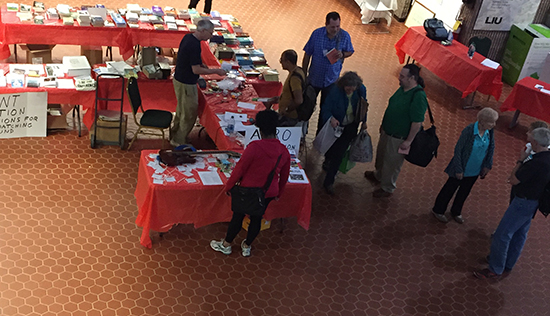
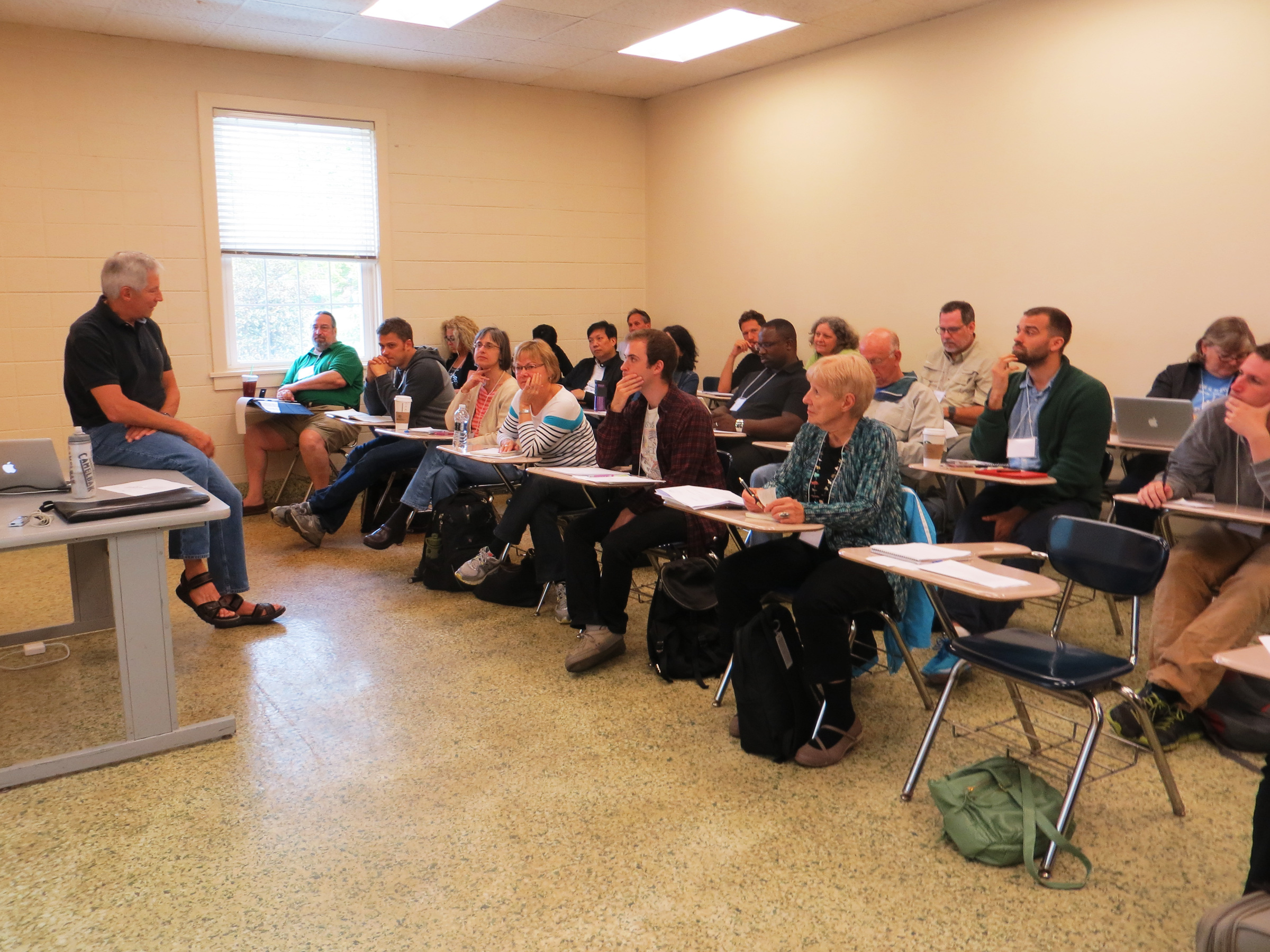
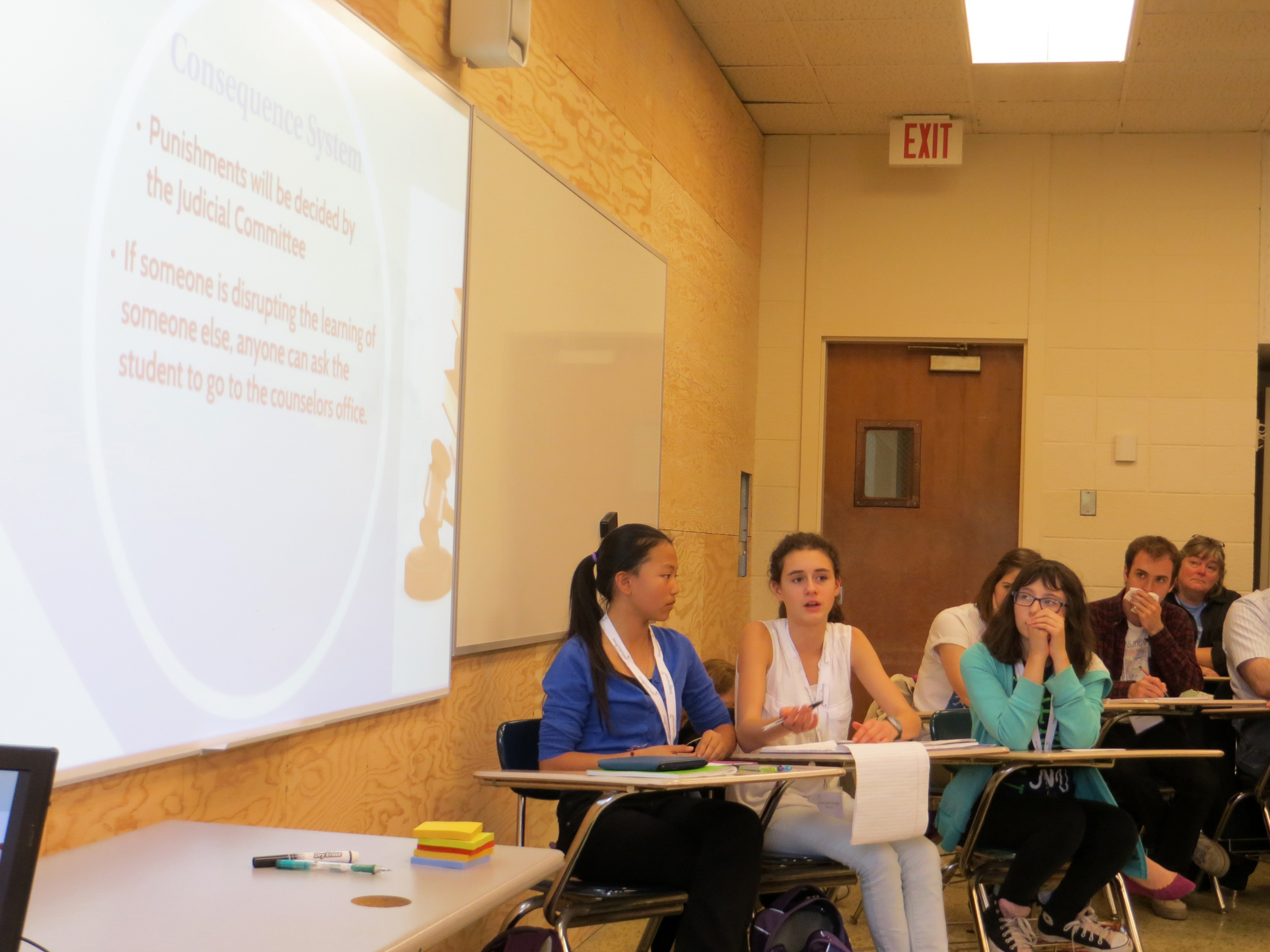
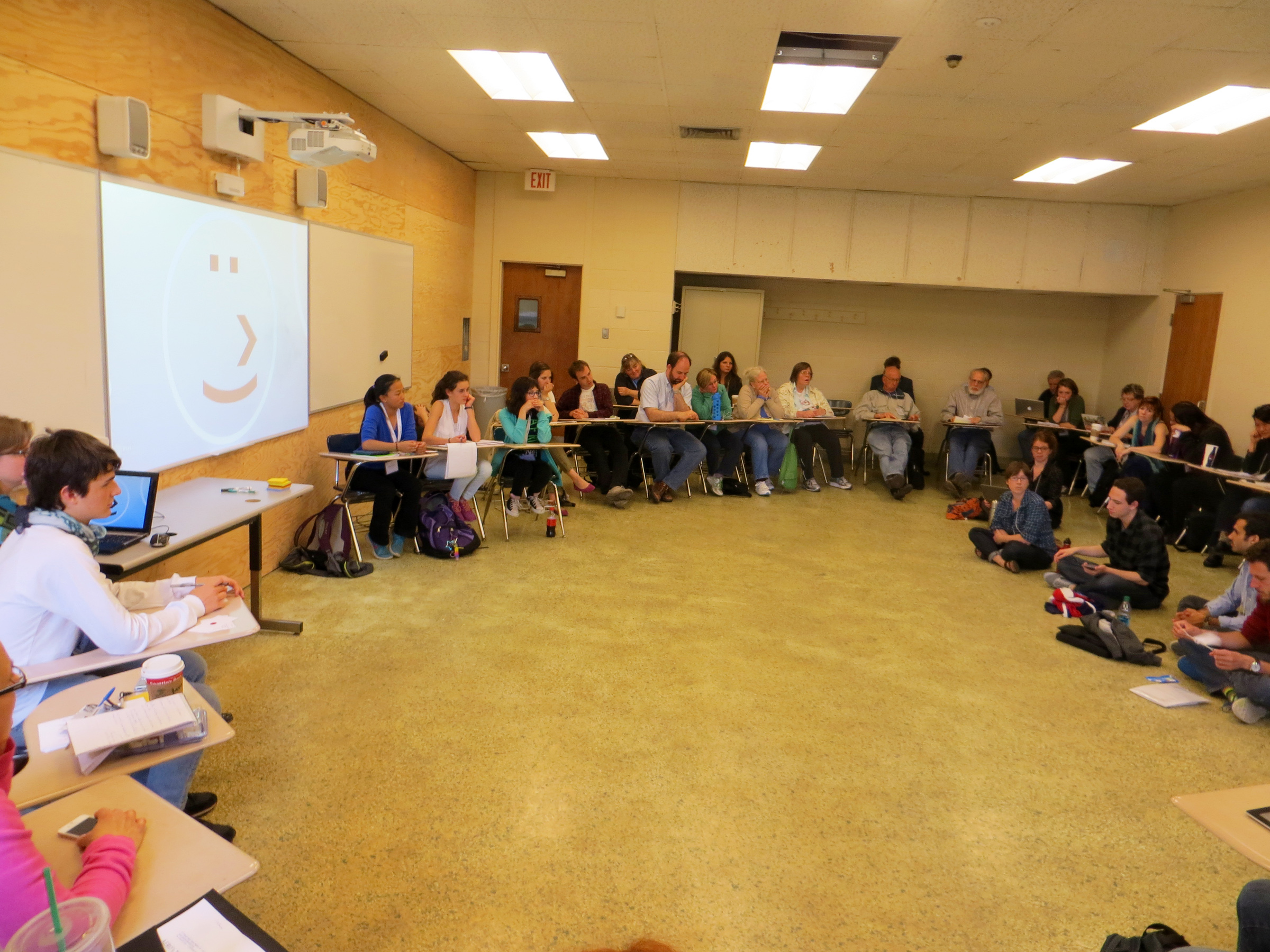
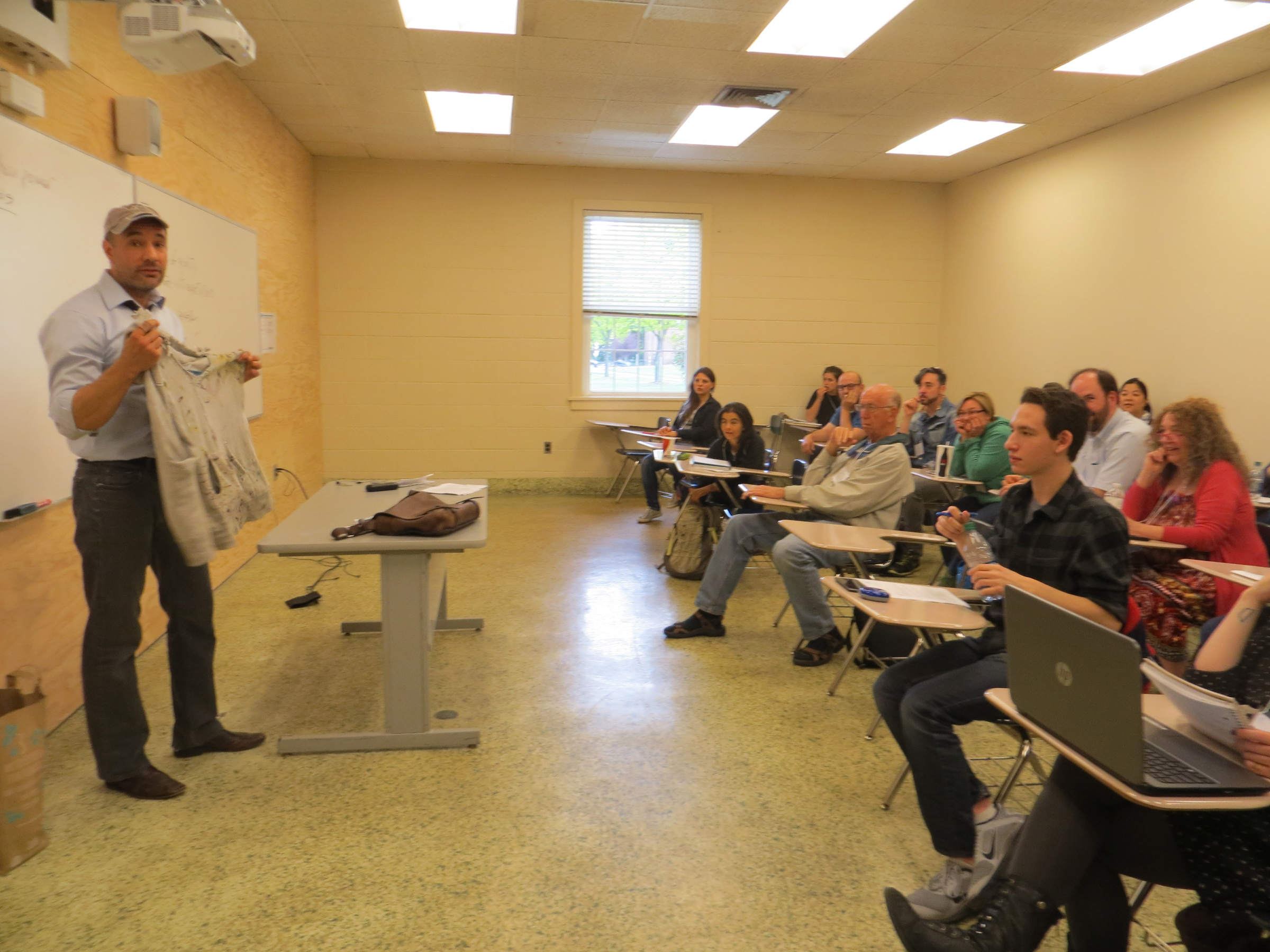
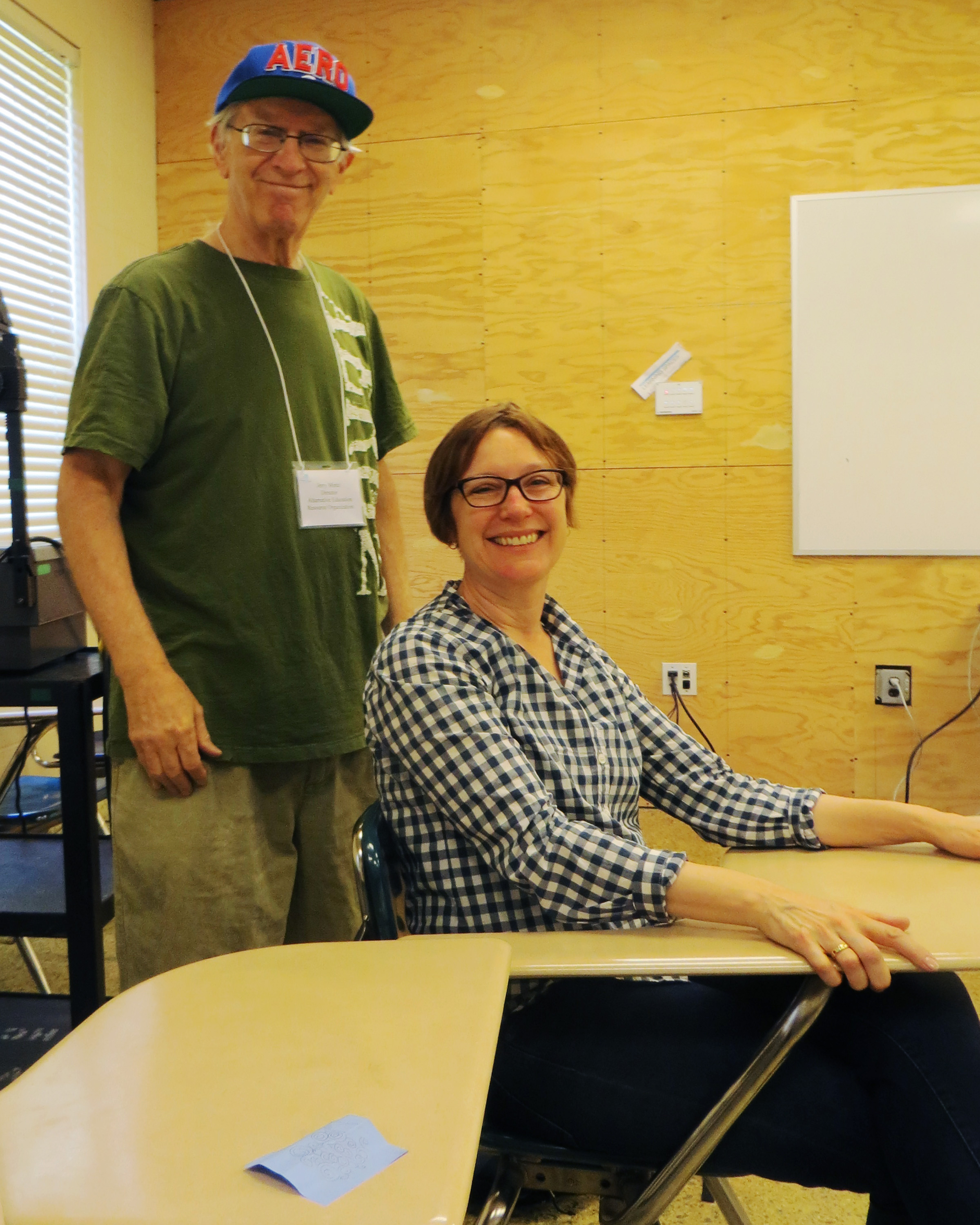
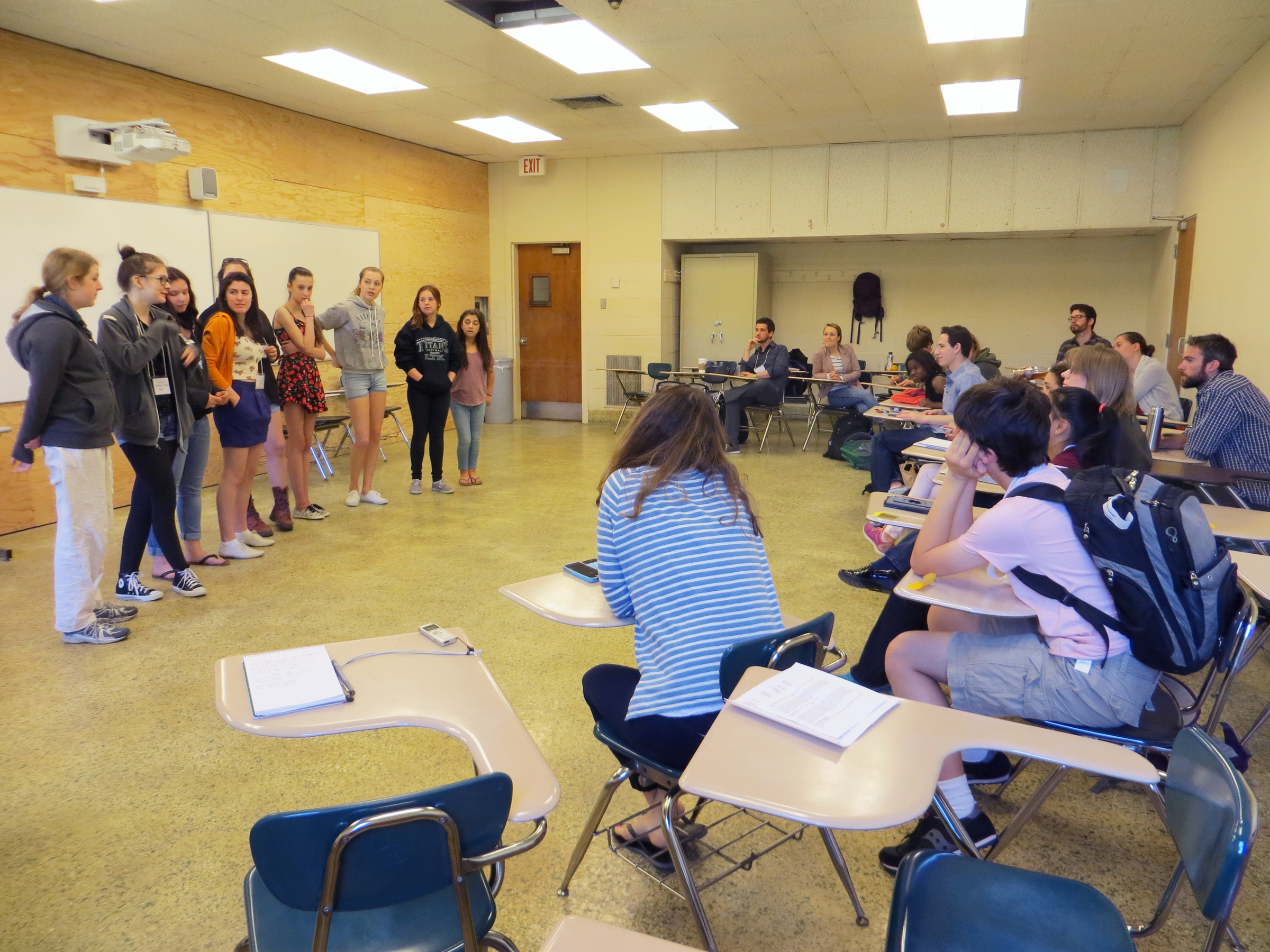
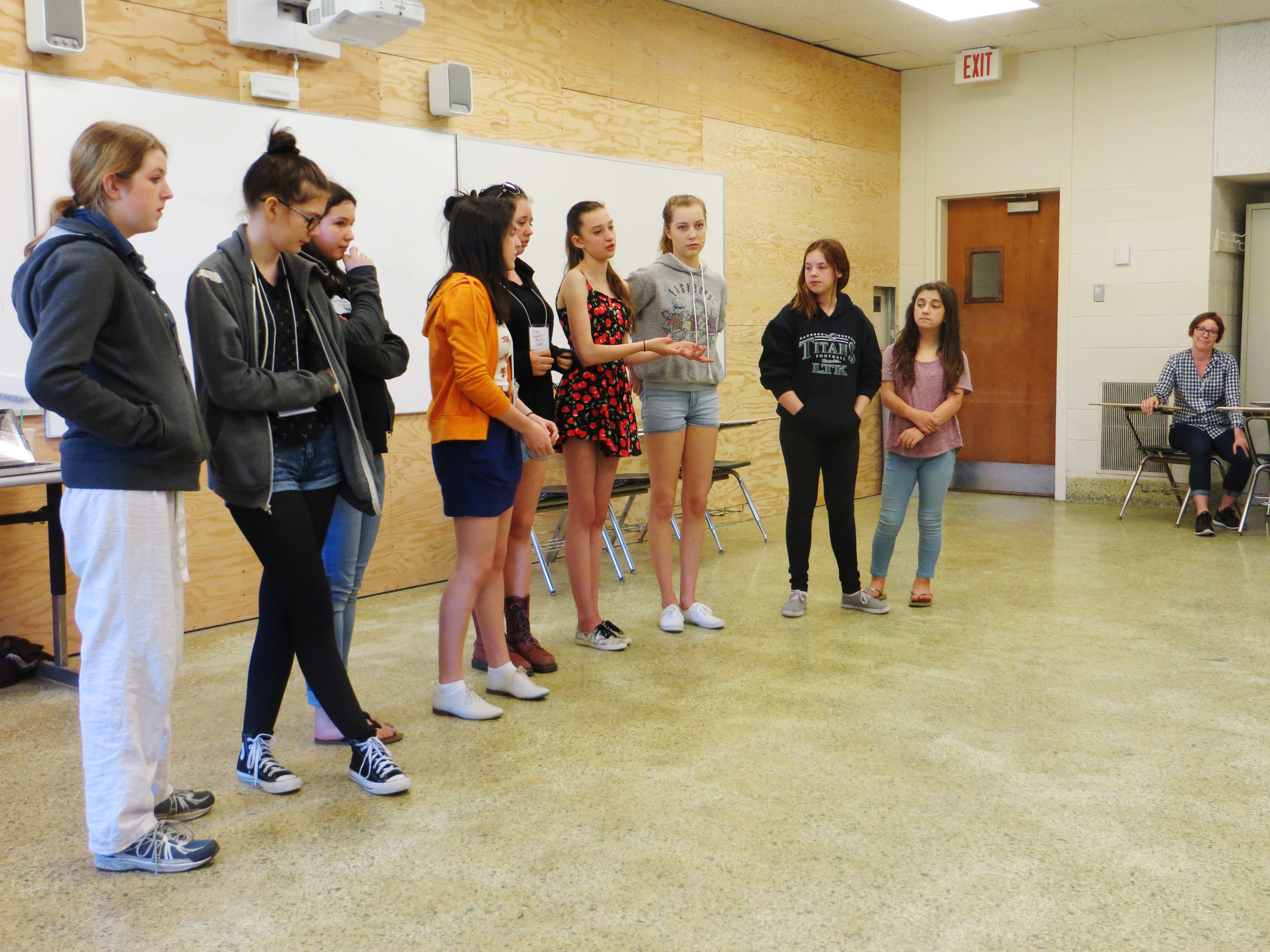
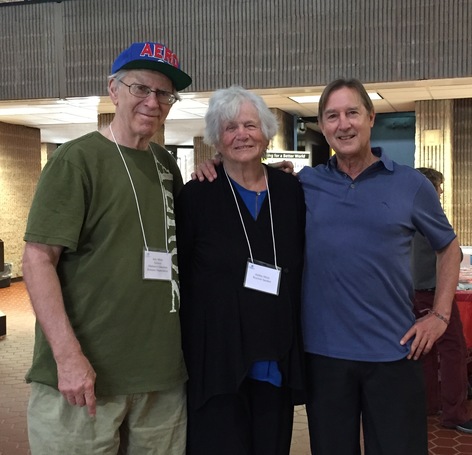
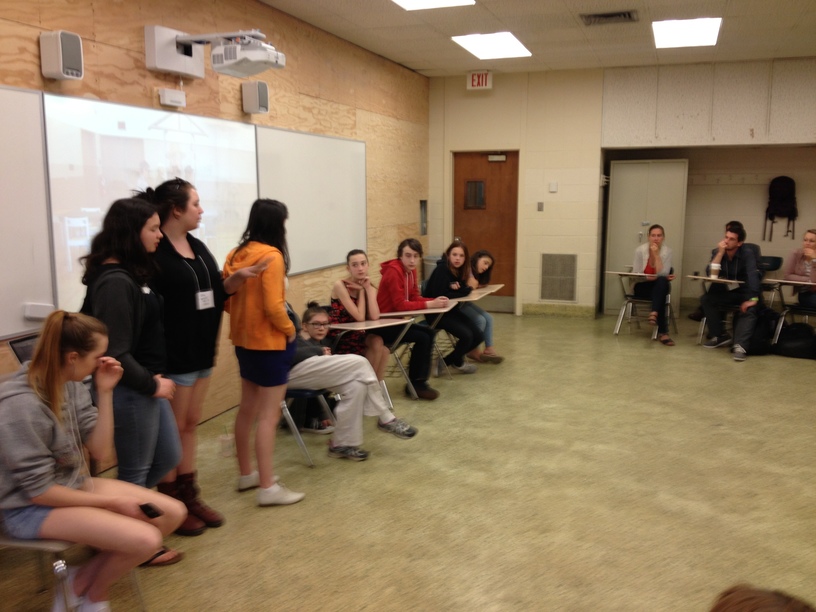
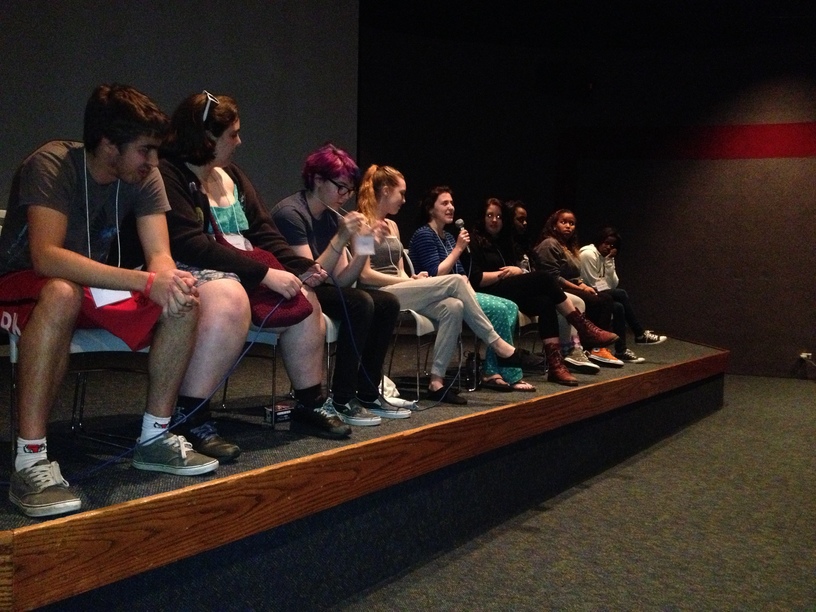
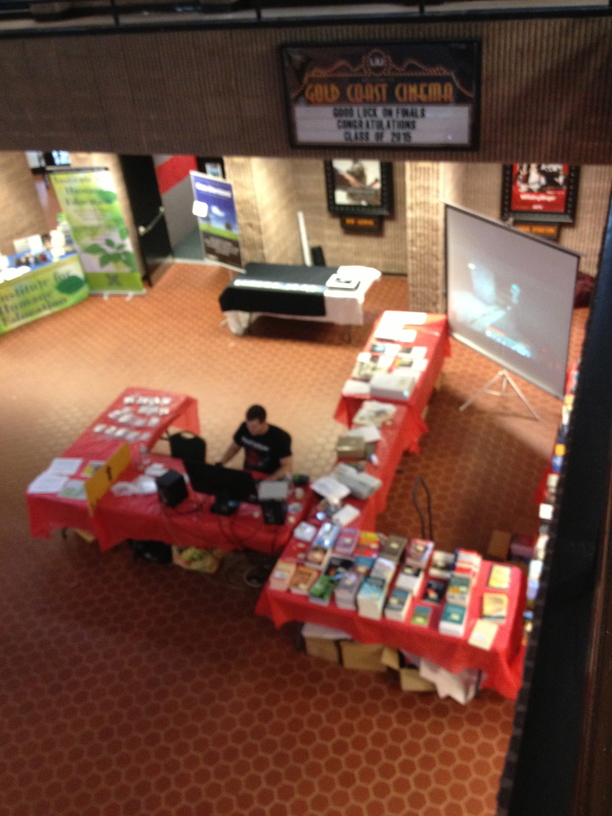
Check Out Our Pictures From The 2015 AERO Conference!
The Schoolhouse Multi-Age (2nd and 3rd grades) Elementary Educator Position
The Schoolhouse Learning Center in South Burlington, Vermont seeks an experienced, dynamic, creative, unflappable, out-of-the-box-thinker for a full time 2nd and 3rd Grade Elementary Teaching position to take over for a beloved, 25 year veteran in this role. We want a teacher who loves children and who is excited to become a part of a community that nurtures their social and academic growth.
The Schoolhouse is a state of Vermont approved independent school and a licensed childcare center in South Burlington, Vermont located on 27 acres of wetlands with a long history of providing a quality education to a wide range of students and their families. A dynamic, diverse educational community that promotes curiosity and independence of mind, The Schoolhouse values each student’s voice, nurtures respectful relationships and empowers students to have a positive impact on their communities.
Job Duty Summary
The elementary teacher teacher will work with a multi-age class of diverse learners and will be responsible for designing and assessing all aspects of curriculum — literacy, math, social studies, science — and integrating each with hands on experiences and projects. As part of the elementary team, the teacher will be a part of school-wide events and activities that are central to students’ experiences and to the school’s culture, including the school play, the Farm, Food Forest Program, research projects on common topics and other performances and presentations.
Essential Job Functions
The ideal candidate will see this as an unusual and exciting opportunity to join a team of creative, skilled educators in a unique academic environment. The candidate will possess the leadership skills and confidence to take on the challenge of creating broad-based learning opportunities while providing a strong grounding in core, foundational areas. The teacher will facilitate learning, not merely provide access to information.
The ideal candidate will:
-
Invent and implement strong academic curricula and assessments in core subject areas, including math, science, literacy, art, social sciences, and physical education
-
Develop a cohesive class culture and provide students with leadership opportunities in the school and broader community.
-
Create curricula that are responsive to the interests and experiences of students while attuned to age-appropriate standards and competencies
-
Devise (and revise) course materials from year to year. There is no pre-packaged curriculum to deliver. The teacher will be inspired by his or her own passions and knowledge, previous teaching experience, and an understanding grade level standards.
-
Provide loving, strength-based, age-appropriate guidance for students’ social, emotional and intellectual growth.
-
Be conversant in the national and state standards in core subject areas and creatively align the program with the standards.
-
Create varied opportunities for individualized learning, including scaffolding curriculum to meet the needs of diverse learners.
-
Be open and willing to work with educational professionals and Schoolhouse administrators related to student evaluations and learning plans (ie IEPs, services plans, psycho-educational evaluations, etc)
-
Model excitement about learning, being part of a team and recognizing the variety of strengths individuals bring to the table.
-
Communicate frequently with diverse audiences — teachers, parents, administration and community organizations.
-
Be part of the larger Schoolhouse Community and support the institution and its mission.
Basic Qualifications
The ideal candidate will be a creative, innovative, generous, humble, outside-the-box-thinker who can seamlessly integrate project- and field-based opportunities with core subject areas.
The candidate will possess a combination of the following qualities:
-
Excellent social and leadership skills
-
Passion for and knowledge about place- and project-based learning
-
Unphased (and even delighted) by the antics and challenges of elementary-aged students
-
Methodical and organized
-
Loving the natural world and desiring to instill that reverence in students
-
Comfort with ambiguity
-
Proven track record of strong student and community relations.
-
Effective communicator — orally and in writing
-
Fierce advocate for students’ need for play and movement
-
Non-dogmatic in adherence to specific teaching pedagogies
-
Committed to strengths-based approach to nurturing students’ social, emotional, physical and intellectual growth
-
Be competent, compassionate and creative in providing a positive and successful environment for all kinds of learners and temperaments including Issues of giftedness, gender, and learning differences
-
Flexible and able to juggle many balls at once
-
Compassionate team player
-
Experienced in alternative/progressive approaches to education
-
Excited to seek professional development and educational opportunities
-
Be willing to work with and be mentored by the current 2nd/3rd grade teacher during Summer/Fall 2015
-
Able to acclimate easily to a new environment and school culture
Education and Training
-
Bachelors degree in a relevant field (ex: Education, Environmental Science, Math, English, History, etc) OR an equivalent experience; teaching certification a plus
-
Minimum of 3 years teaching experience at the elementary level; experience in independent schools and/or alternative learning environments a plus
-
Technologically competent, including working knowledge of personal computers, google docs and tablet-based apps.
-
Understanding of principles, philosophy and practices in child development and education.
-
Must possess a valid driver’s license and be willing to seek training to obtain a Type II bus driving endorsement.
Physical Demands
-
The physical demands described here are representative of those that must be met by an employee to successfully perform the essential functions of this job. Reasonable accommodations may be made to enable individuals with disabilities to perform the essential functions.
-
While performing the duties of this job, the employee is frequently required to walk, sit (on floors and chairs), talk, listen, use hands and fingers to feel, handle or operate objects, tools or controls, and reach with hands and arms. Specific vision abilities required by this job include near and far vision and the ability to monitor multiple children in indoor and outdoor settings. The employee must occasionally lift and/or move up to 75 pounds (i.e., tables, chairs).
For more information about The Schoolhouse please visit the Schoolhouse website: http://www.theschoolhousevt.org/